
STANDING ON THE SHOULDERS OF GIANTS
Patañjali on Inner Peace & Emotional Balance
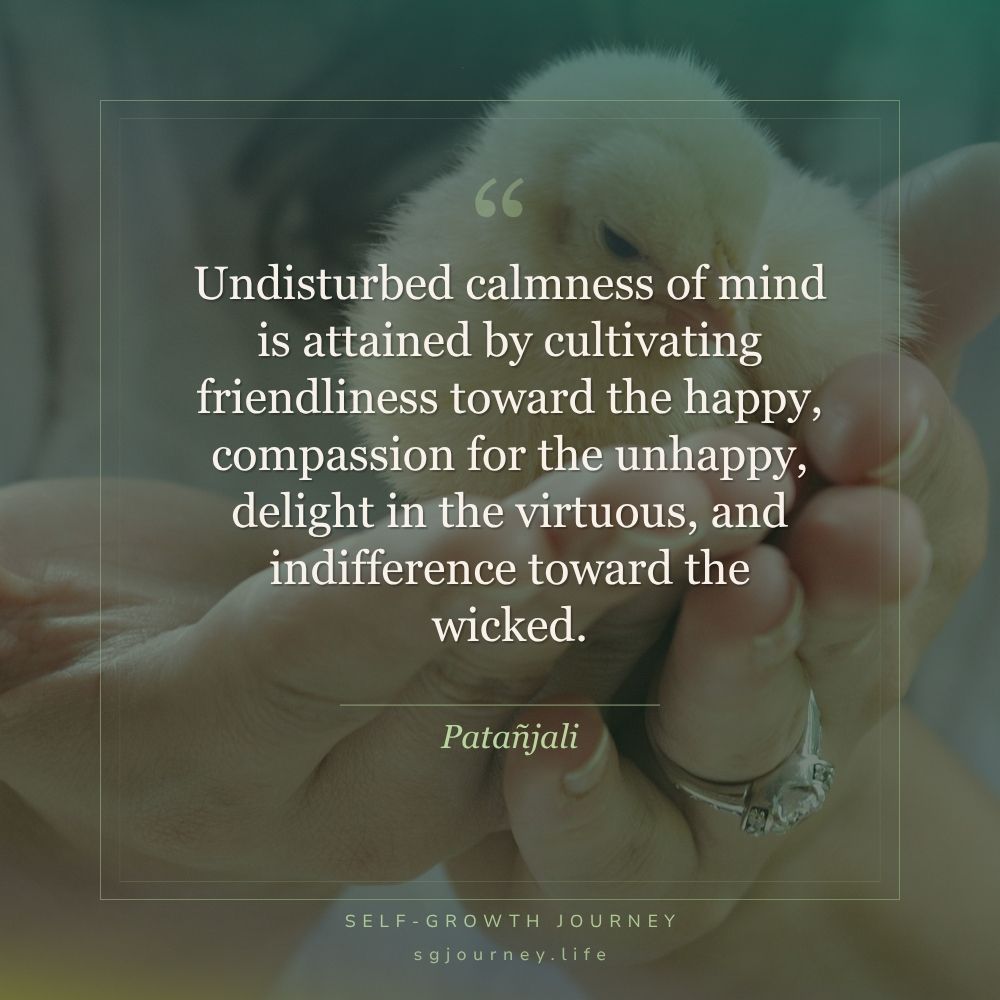
Undisturbed calmness of mind is attained by cultivating friendliness toward the happy, compassion for the unhappy, delight in the virtuous, and indifference toward the wicked.
—Patañjali
Ancient sage traditionally associated with the Yoga Sutras and the discipline of the mind
Meet the Giant
Patañjali
Patañjali is the traditional name associated with the Yoga Sutras, a foundational text of classical yoga philosophy compiled in ancient India. The sutras describe practices for steadying the mind, cultivating discernment, and reducing the disturbances that obscure clear awareness. Different translations vary in wording, but the text has profoundly shaped later traditions of yoga and meditation.
What This Means
Patañjali’s words turn attention inward. Inner steadiness grows through the attitudes we repeatedly practice toward ourselves and other people. Inner balance is not a permanent state in which nothing disturbs us. It is the growing ability to notice what is happening, respond with greater intention, and return to steadiness when life pulls us away from it.
That distinction matters because we cannot control every event, thought, or emotion that appears. We can, however, strengthen the space between what happens and how we respond. Practices such as reflection, acceptance, meditation, compassion, or letting go can make that space wider.
The invitation in “Cultivate a Steady Mind” is therefore not to admire the idea from a distance. It is to test it against real life. Notice where the principle already appears in your choices, where you resist it, and what one concrete experiment could make the insight more than a quotation.
Why It Matters
This matters because inner turbulence affects judgment, relationships, and energy. Greater steadiness does not remove difficulty, but it can change the quality of the response.
Inner steadiness grows through the attitudes we repeatedly practice toward ourselves and other people. In practice, that can mean making the next step smaller, protecting a boundary, asking a better question, or simply noticing what you usually rush past. The point is not perfection; it is creating a more conscious default.
Used this way, “Cultivate a Steady Mind” becomes a working principle rather than an inspirational slogan: something you can return to when the old pattern reappears.
A Moment of Reflection
What are you carrying that is disturbing your inner balance? What response inspired by “Cultivate a Steady Mind” could help you meet it with greater steadiness, acceptance, or compassion?
Carry This With You
Inner steadiness grows through the attitudes we repeatedly practice toward ourselves and other people.
Source & Attribution
Patañjali, Yoga Sutras 1.33; translation varies
Verified
Continue exploring the people, ideas, and pillars behind this wisdom.
Explore More Wisdom