
STANDING ON THE SHOULDERS OF GIANTS
Seneca on Acceptance, Gratitude & Forgiveness
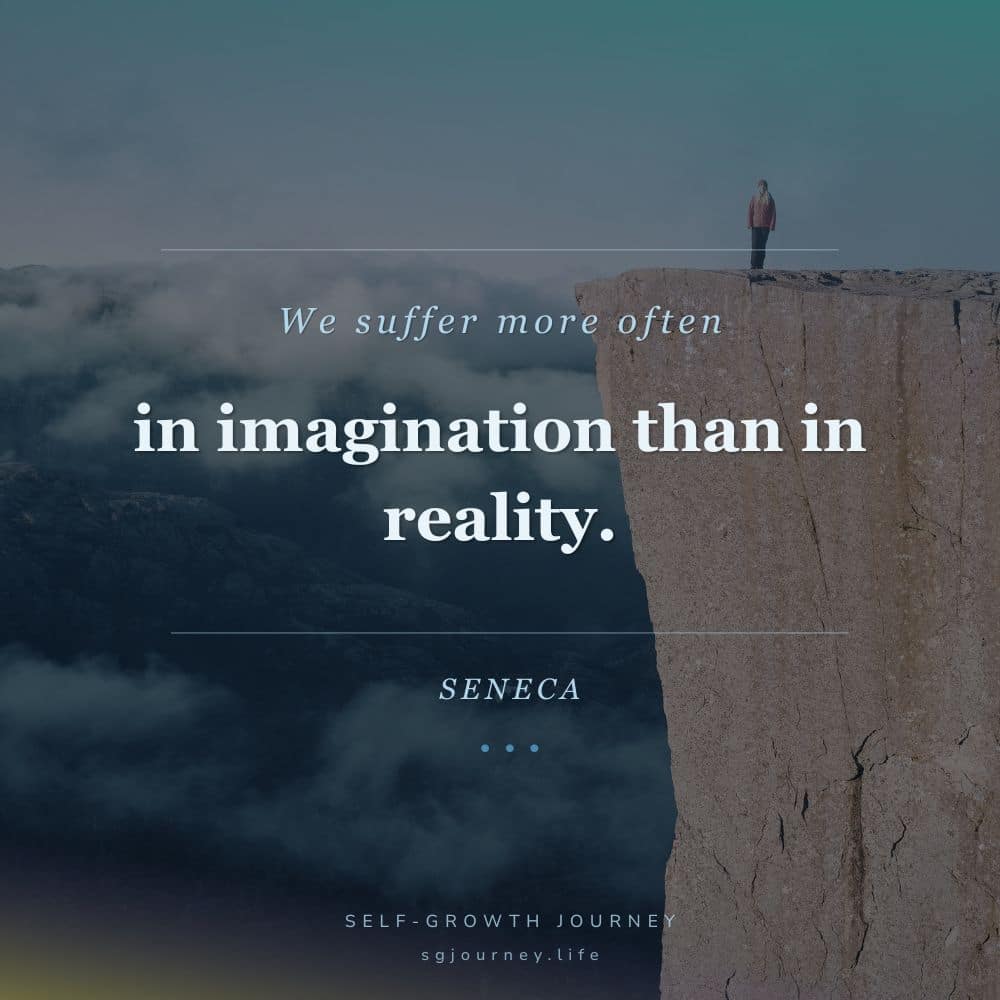
We suffer more often in imagination than in reality.
—Seneca
Roman Stoic writer who separated real danger from anticipated suffering
Meet the Giant
Seneca
Lucius Annaeus Seneca was a Roman statesman, dramatist, essayist, and Stoic philosopher whose writings explored mortality, adversity, anger, friendship, wealth, and emotional discipline. His political life included influence, exile, compromise, and eventual forced suicide under Nero. This sentence appears in Moral Letter 13 to Lucilius, within a discussion of groundless fears. Seneca does not deny real danger; he warns against suffering in advance through imagined scenarios that may never occur and can weaken our response to what is actually present.
What This Means
The quotation suggests that anticipatory stories can create suffering before reality requires it, consuming strength needed for the present. It redirects attention from a dramatic final answer toward the mental habit or daily practice through which understanding develops. The line becomes useful when it helps us notice where distraction, premature judgment, fear, imagined catastrophe, or false certainty is shaping our behavior.
A responsible reading preserves complexity. Solitude is not a cure for every human problem, withholding judgment is not indifference to injustice, and fear sometimes protects us from genuine danger. Looking inward does not invalidate another person’s behavior, while meaning should never be used to romanticize preventable suffering. Even patience with uncertainty must coexist with timely action when safety or responsibility requires it.
The practical invitation is to create a small space between impulse and response. Sit quietly before reaching for distraction. Check a claim before repeating it. Separate a real problem from an imagined future. Enter a difficult conversation gradually, or let an unanswered question remain open while experience continues teaching. These modest practices turn the quotation into discernment. Over time, they shape how we use attention, meet fear, build our days, and remain intellectually honest with ourselves.
Why It Matters
This matters because anticipatory stories can create suffering before reality requires it, consuming strength needed for the present. Daily choices are easily governed by noise, urgency, habitual opinions, and stories about what might happen. When those forces remain unseen, they can consume time and emotional energy while giving us the illusion that we are responding to reality itself.
The quotation provides a practical checkpoint: what do I know, what am I imagining, what am I avoiding, and what belongs to me now? Answering carefully may lead to stillness, research, a boundary, a scheduled hour, a courageous conversation, or permission to leave something unjudged. None of these actions needs to be dramatic. Their value comes through repetition. Small acts of clarity accumulate into a life with greater presence, humility, courage, and alignment between what we value and how we actually spend our days.
A Moment of Reflection
What feared event are you repeatedly rehearsing? Separate what is happening now from what you imagine, then identify the preparation that is actually useful today. What small experiment could help you test this insight in daily life?
Carry This With You
Anticipatory stories can create suffering before reality requires it, consuming strength needed for the present.
Source & Attribution
Seneca, Moral Letters to Lucilius, Letter 13, section 4
Verified
Continue exploring the people, ideas, and pillars behind this wisdom.
Explore More Wisdom