
STANDING ON THE SHOULDERS OF GIANTS
T. S. Eliot on Self-Awareness & Reflection
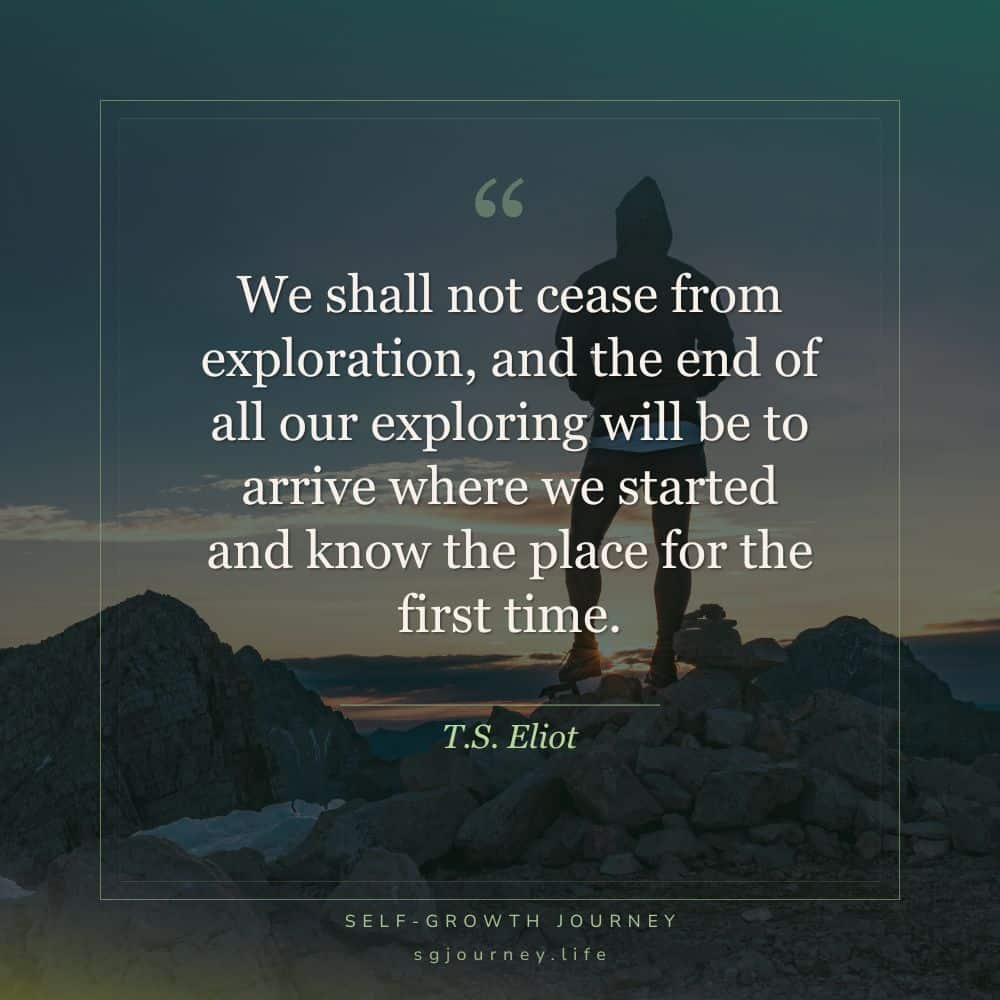
We shall not cease from exploration, and the end of all our exploring will be to arrive where we started and know the place for the first time.
—T. S. Eliot
Poet, critic, and author of Four Quartets
Meet the Giant
T. S. Eliot
T. S. Eliot was an American-born British poet, playwright, editor, and literary critic whose work profoundly influenced modern literature. His major poems include The Waste Land and Four Quartets, a meditation on time, memory, history, and spiritual transformation. These lines appear near the conclusion of “Little Gidding,” the final quartet. Within the poem, returning to the beginning does not mean going backward; experience allows the familiar place to be encountered with a newly awakened understanding.
What This Means
Exploration is often imagined as movement toward the unfamiliar: new places, ideas, roles, or achievements. Eliot adds a deeper destination. After the journey changes us, we can return to what was always present and finally perceive it without the assumptions that once made it invisible.
The starting place has not necessarily changed; the explorer has. Experience gives old words new meanings, reveals patterns in childhood, and allows familiar relationships to be seen with greater compassion or clarity. What seemed ordinary becomes strange enough to notice.
This circular movement differs from repetition. Repetition returns unconsciously and recreates the same response. Reflection returns with attention and allows the same material to teach something new. The journey gains meaning through integration.
The quote also tempers the fantasy that truth is always elsewhere. Seeking is necessary, but endless novelty can become avoidance of what waits close to home. Mature exploration eventually brings discovery back into ordinary life. Wisdom appears when what we learned changes how we see the place from which we began.
Why It Matters
Growth can make earlier versions of our lives look embarrassing or irrelevant. Yet returning to them with new understanding often reveals strengths, needs, and wounds that were impossible to name at the time. The past becomes information rather than a place of imprisonment.
This matters during transitions. After travel, therapy, education, grief, or a major achievement, the question is not only what happened but how the familiar world now looks. Integration turns experience into usable wisdom.
A deliberate return might mean rereading an old journal, revisiting a belief, or having a different conversation with someone long known. The purpose is not nostalgia. It is to discover what the journey has made us capable of seeing for the first time.
A Moment of Reflection
What familiar place, relationship, or part of your history might look different through the person you have become? What could a deliberate return help you finally understand?
Carry This With You
Exploration becomes wisdom when new experience transforms how we understand the familiar place from which we began.
Source & Attribution
“Little Gidding,” Four Quartets
Verified
Continue exploring the people, ideas, and pillars behind this wisdom.
Explore More Wisdom