
STANDING ON THE SHOULDERS OF GIANTS
Alvin Toffler on Mindset & Perspective
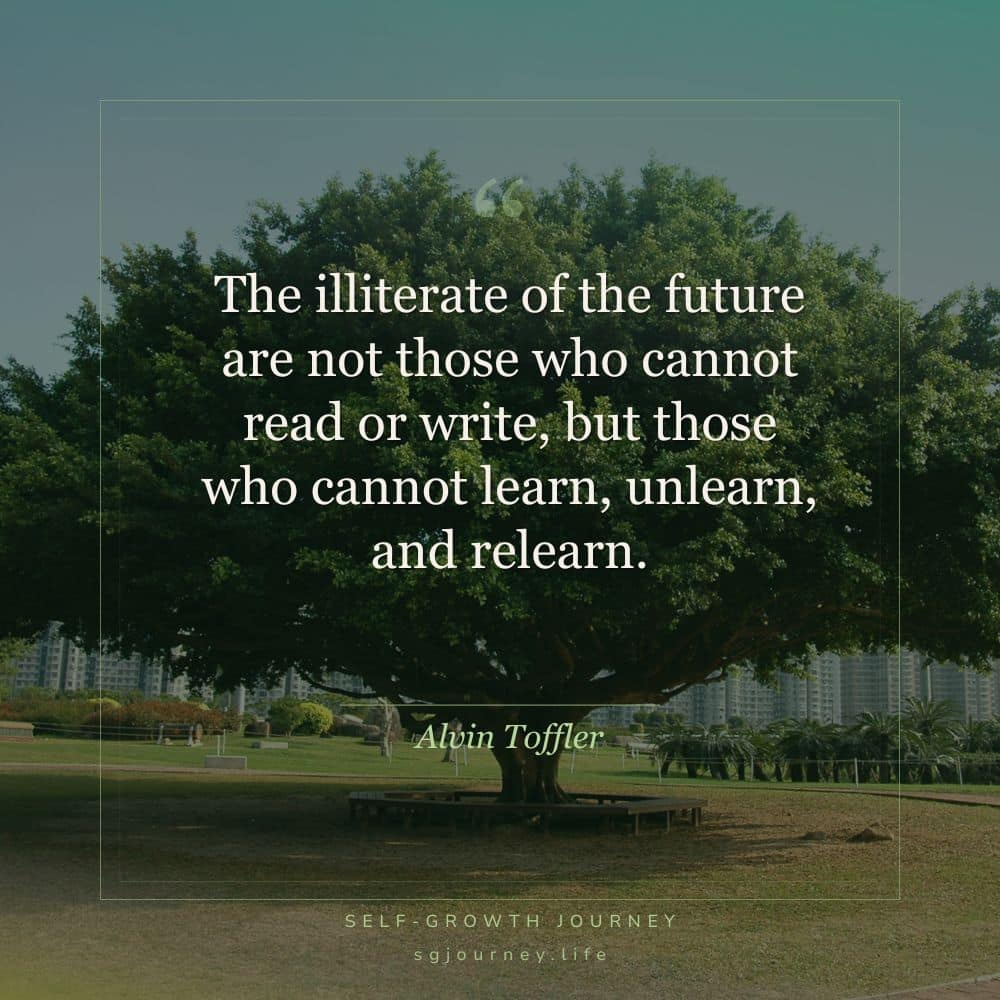
The illiterate of the future are not those who cannot read or write, but those who cannot learn, unlearn, and relearn.
—Alvin Toffler
Futurist and author who examined accelerating change
Meet the Giant
Alvin Toffler
Alvin Toffler was an American writer and futurist whose books Future Shock and The Third Wave explored how rapid technological and social change affects individuals and institutions. He argued that education must prepare people for continual adaptation rather than merely transmit fixed information. The familiar “illiterate of the future” wording condenses ideas from Future Shock, including Toffler’s call to teach students how to learn, unlearn, and relearn. It is best treated as a widely circulated paraphrase rather than a verified verbatim sentence.
What This Means
Literacy provides access to information; adaptive learning determines what we do when information, tools, or conditions change. To learn is to add understanding. To unlearn is to recognize that a once-useful assumption no longer fits. To relearn is to build a better response without treating the previous one as permanent identity.
Unlearning is often the most difficult stage because knowledge becomes connected to competence and belonging. Admitting that an established method is obsolete can feel like admitting that our earlier self was foolish. In reality, a method may have been appropriate then and inadequate now. Growth allows both statements to be true.
Relearning also demands more than consuming new information. It requires practice until a revised understanding can guide behavior. The old pattern may remain easier for a while, especially under stress.
The quote reframes education as an ongoing capacity rather than a completed phase. The most durable skill is not possessing every answer, but remaining curious, flexible, and humble enough to revise the answers we already possess.
Why It Matters
Work, technology, relationships, and culture change faster than many established habits. Expertise remains valuable, but it becomes fragile when it refuses correction. The ability to update helps experience remain an asset rather than harden into resistance.
This matters personally as well. We inherit beliefs about success, emotion, gender, family, and worth that may have protected or guided us in one season. Examining them is not betrayal; it is responsible ownership of the life they now shape.
A useful learning practice includes deliberate exposure to disagreement, experiments with new methods, and reflection on what no longer works. We do not need to discard everything old. We need enough flexibility to distinguish enduring wisdom from a familiar habit whose time has passed.
A Moment of Reflection
What belief, skill, or routine once served you but may no longer fit? What would you need to learn—and temporarily tolerate being bad at—to replace it wisely?
Carry This With You
Future readiness depends not only on what we know, but on our willingness to revise and relearn when reality changes.
Source & Attribution
Future Shock (1970); popular wording paraphrases Toffler’s discussion of learning, unlearning, and relearning
Commonly Attributed
Continue exploring the people, ideas, and pillars behind this wisdom.
Explore More Wisdom