
STANDING ON THE SHOULDERS OF GIANTS
Booker T. Washington on Service & Generosity
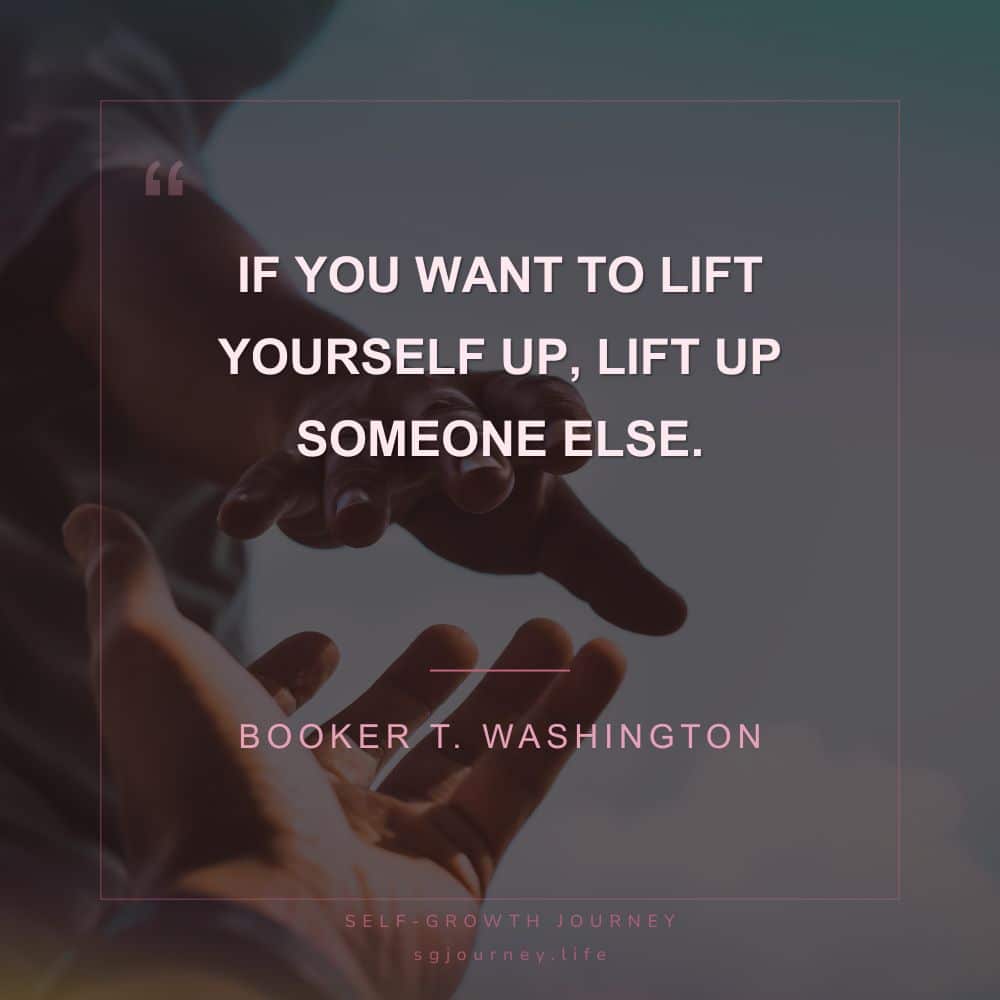
If you want to lift yourself up, lift up someone else.
—Booker T. Washington
Educator and institution-builder who championed practical advancement
Meet the Giant
Booker T. Washington
Booker T. Washington was an American educator, author, orator, and adviser who was born into slavery and became the founding leader of Tuskegee Institute. His program emphasized education, skilled work, economic development, and institution-building, while his accommodationist approach to segregation drew criticism from contemporaries including W. E. B. Du Bois. This quotation fits his public ethic of advancement through usefulness, but its precise appearance in Washington's speeches or writings has not been established. That distinction keeps the historical context connected to the insight without overstating the quotation's documentation.
What This Means
The quotation suggests that helping another person rise can expand our own purpose, confidence, and sense of possibility. It moves the focus away from passive agreement and toward the way perception, attention, relationship, or choice shapes lived experience. Used well, the line becomes a question we can bring to a particular moment: what part of this situation is asking for clearer understanding or more deliberate action?
A careful reading avoids turning the thought into a slogan. Helping can become control; forgiveness can be confused with excusing harm; acceptance can coexist with firm boundaries; and the power to choose a response is always affected by trauma, health, coercion, and material conditions. Ancient sayings also reach us through translation and paraphrase. These limits do not erase the insight, but they keep its application humane and intellectually honest.
The practical invitation is modest. Notice the assumption, distraction, impulse, or unnecessary complication that is operating now. Then choose one response that better reflects the value behind the quotation. Repeated moments of inquiry, attention, companionship, simplification, or self-command gradually become a pattern. Wisdom matters most when it changes how we meet an ordinary conversation, decision, setback, or opportunity.
Why It Matters
This matters because helping another person rise can expand our own purpose, confidence, and sense of possibility. Much of daily life is shaped by filters and reactions that operate before conscious choice: what we understand, where attention lands, which story we tell, and whether we try to control what cannot be controlled. The quotation can create a pause inside that automatic sequence.
In the pause, responsibility becomes more precise. We can distinguish support from rescue, facts from interpretations, simplicity from shallowness, and inner freedom from the fantasy of total control. That distinction points toward an action proportionate to the real situation. A thoughtful question, undivided attention, a useful act, a changed judgment, or one unnecessary element removed may seem small. Yet these choices accumulate, making humility, connection, clarity, and resilience visible in everyday conduct.
A Moment of Reflection
Who could benefit from something you already know, possess, or can do? What form of help would strengthen their agency while also reconnecting you with purpose? What small experiment could help you test that insight in daily life?
Carry This With You
Helping another person rise can expand our own purpose, confidence, and sense of possibility, made visible through deliberate choices in ordinary life.
Source & Attribution
Commonly attributed to Booker T. Washington; exact source not identified
Commonly Attributed
Continue exploring the people, ideas, and pillars behind this wisdom.
Explore More Wisdom