
STANDING ON THE SHOULDERS OF GIANTS
Fred Rogers on Relationships & Connection
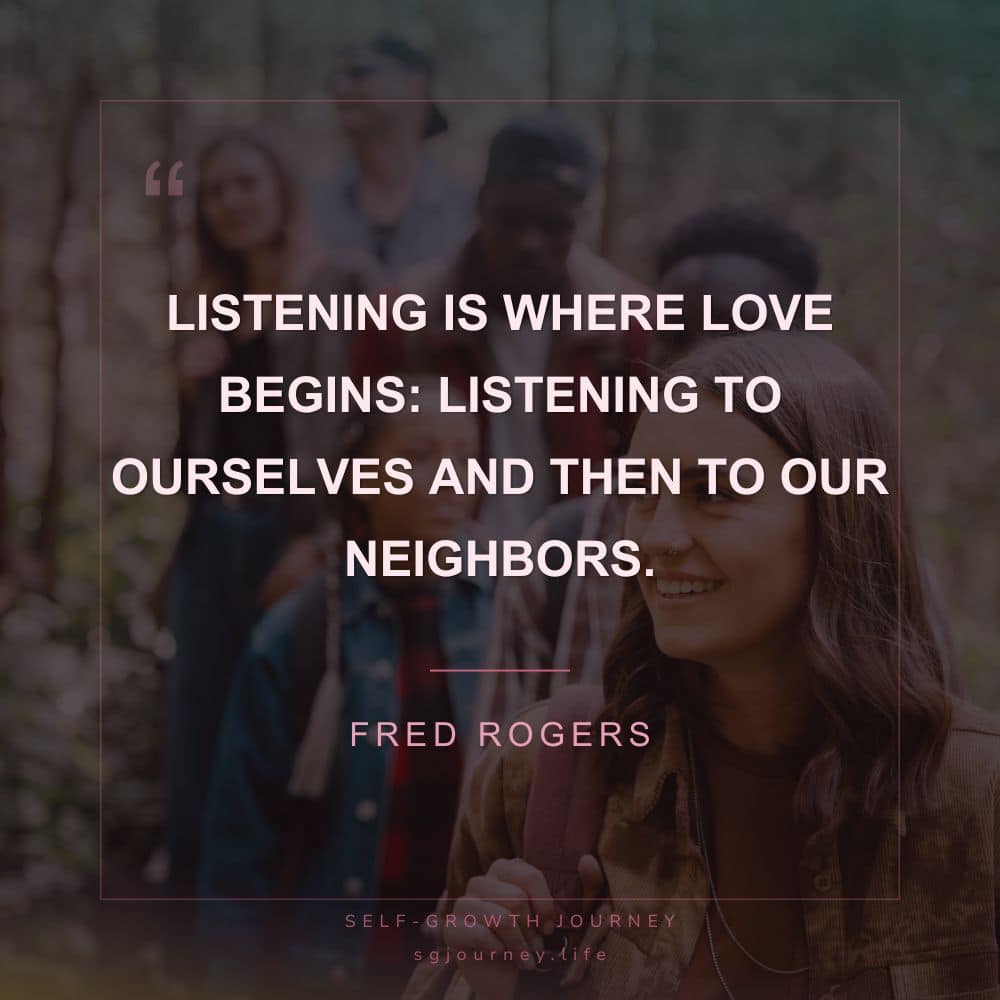
Listening is where love begins: listening to ourselves and then to our neighbors.
—Fred Rogers
Educator, minister, and creator of Mister Rogers’ Neighborhood
Meet the Giant
Fred Rogers
Fred Rogers was an American television host, musician, writer, producer, and ordained Presbyterian minister who created Mister Rogers' Neighborhood. For more than three decades, he spoke to children with unusual patience and respect, addressing emotions, conflict, loss, difference, and self-worth without condescension. His work treated careful attention as a form of care. This quotation captures that philosophy by linking love to two kinds of listening: inward awareness and genuine attention to other people. It also frames neighboring not as proximity alone, but as a relationship built through receptivity.
What This Means
Rogers places listening before loving action. That order matters. Without listening, what we call care can become projection: we give the help we prefer, answer a question that was not asked, or assume we understand before another person has finished speaking. Listening allows love to respond to a real person rather than an imagined version of them.
The quotation begins with listening to ourselves. Inner attention helps us notice fear, defensiveness, fatigue, longing, and prejudice before those forces silently steer our behavior. It is not self-absorption; it is preparation for honest contact. When we can name what is happening within us, we are less likely to confuse our reaction with someone else’s reality.
Then attention turns toward our neighbors. Deep listening involves more than waiting to speak. It means making room for words, tone, pauses, and feelings without immediately judging, correcting, or redirecting. We may still disagree, but understanding can precede response. The phrase “love begins” is modest: listening is not the whole of love, yet it is a reliable doorway. Through it, people become less abstract. Their needs, limits, and hopes grow clearer, and care can take a form that is actually useful.
Why It Matters
Many conflicts intensify because people respond to assumptions rather than experience. Listening slows that cycle. It can reveal that anger contains fear, resistance contains a need for dignity, or silence contains something that has not felt safe to say. In leadership and relationships, that knowledge improves decisions as well as connection.
The inward half of the quotation is equally practical. If we ignore our own emotional state, we may offer attention while secretly seeking approval, control, or escape. Self-listening helps us establish boundaries and approach others with greater steadiness. This matters in a noisy culture that rewards quick reactions. Loving attention asks us to pause long enough for another reality to register. We may not be able to solve what we hear, but being accurately heard can itself restore dignity and reduce loneliness.
A Moment of Reflection
What feeling or need in yourself deserves an honest hearing today? Who in your life might need your full attention without advice or interruption, and what could help you create enough space to offer it?
Carry This With You
Love becomes responsive rather than presumptive when we listen honestly to ourselves and attentively to others.
Source & Attribution
Fred Rogers, commonly collected in The World According to Mister Rogers
Commonly Attributed
Continue exploring the people, ideas, and pillars behind this wisdom.
Explore More Wisdom