
STANDING ON THE SHOULDERS OF GIANTS
Mary Oliver on Growth & Change
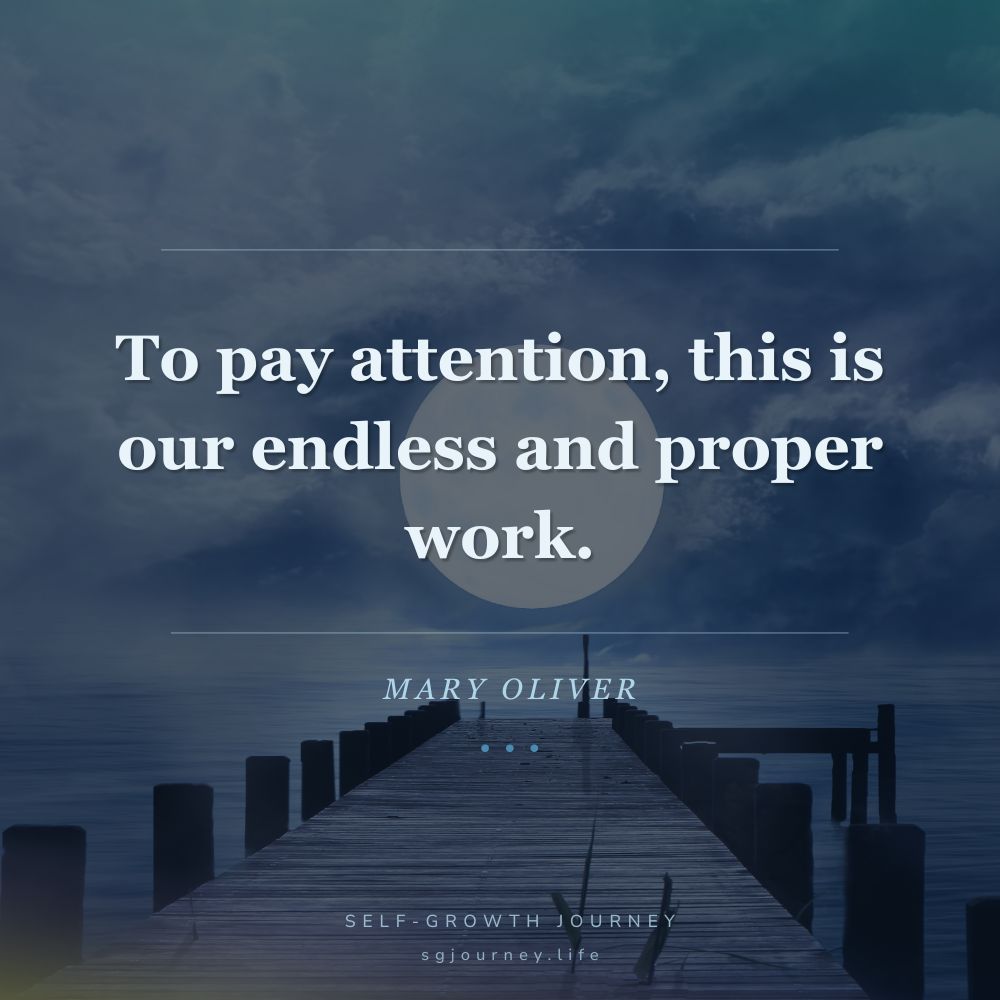
To pay attention, this is our endless and proper work.
—Mary Oliver
Poet who made sustained attention a form of devotion
Meet the Giant
Mary Oliver
Mary Oliver was an American poet and essayist celebrated for clear, attentive writing about nature, mortality, wonder, solitude, and the obligations of being alive. She received the Pulitzer Prize for American Primitive and the National Book Award for New and Selected Poems. This sentence comes from her poem “Yes! No!,” collected in Owls and Other Fantasies. Within Oliver's work, attention is more than concentration. It is a moral and spiritual practice: looking closely enough to encounter the world beyond habit, abstraction, and our own restless preoccupations.
What This Means
The quotation suggests that a meaningful life requires the continuing practice of noticing what is actually present and worthy of care. It directs attention toward a mental or relational practice that can be overlooked: connection, learning, interpretation, honest observation, simplicity, chosen character, impermanence, focused awareness, humility, action, or perspective. The line becomes valuable when it interrupts an automatic response and helps us see what our habits of attention are producing.
A responsible reading preserves complexity. Love does not eliminate loneliness or danger, and knowledge can be used destructively as well as wisely. Thought shapes experience without making every event morally neutral. Simplicity should not erase necessary nuance, while choosing an identity cannot guarantee an outcome beyond our control. Attention to thoughts is not a command to suppress difficult emotions. Humility does not require self-erasure, and examining judgment does not forbid discernment, accountability, or protective boundaries. Impermanence can comfort us, but it should not excuse avoidable harm or delay needed action.
The practical invitation is to notice one place where the quotation applies today. Seek the missing fact. Separate circumstance from interpretation. Remove one needless detail. Translate a stated value into observable conduct. Broaden attention when one concern fills the entire frame, or let awareness move outward toward a person or part of the world you have stopped noticing. Small acts like these turn memorable language into lived wisdom. Repeated over time, they reshape attention, character, relationships, and the quality of our choices.
Why It Matters
This matters because a meaningful life requires the continuing practice of noticing what is actually present and worthy of care. Human attention is selective, and whatever occupies it can quickly feel like the whole of reality. We may mistake familiarity for truth, discussion for action, complication for seriousness, or a temporary condition for a permanent identity. Those errors influence how we spend time, treat people, and respond to uncertainty.
The quotation offers a checkpoint rather than a complete philosophy: what am I seeing clearly, what am I adding, and what can I practice now? The answer may be a conversation, a boundary, further research, a simplified commitment, a deliberate act of goodness, or several quiet minutes of attention. None guarantees control over circumstances. Each improves the quality of participation within them. Over time, such choices build greater perspective and integrity—the ability to remain grounded in what matters without being captured by every passing thought, pressure, or distraction.
A Moment of Reflection
What part of your ordinary surroundings have you stopped seeing? Spend five undistracted minutes observing it closely; what detail, feeling, or question becomes available through sustained attention? What might change if you practiced that insight for one week?
Carry This With You
A meaningful life requires the continuing practice of noticing what is actually present and worthy of care in daily life.
Source & Attribution
Mary Oliver, “Yes! No!,” Owls and Other Fantasies (2003)
Verified
Continue exploring the people, ideas, and pillars behind this wisdom.
Explore More Wisdom