
STANDING ON THE SHOULDERS OF GIANTS
Atticus Finch (Harper Lee) on Kindness & Compassion
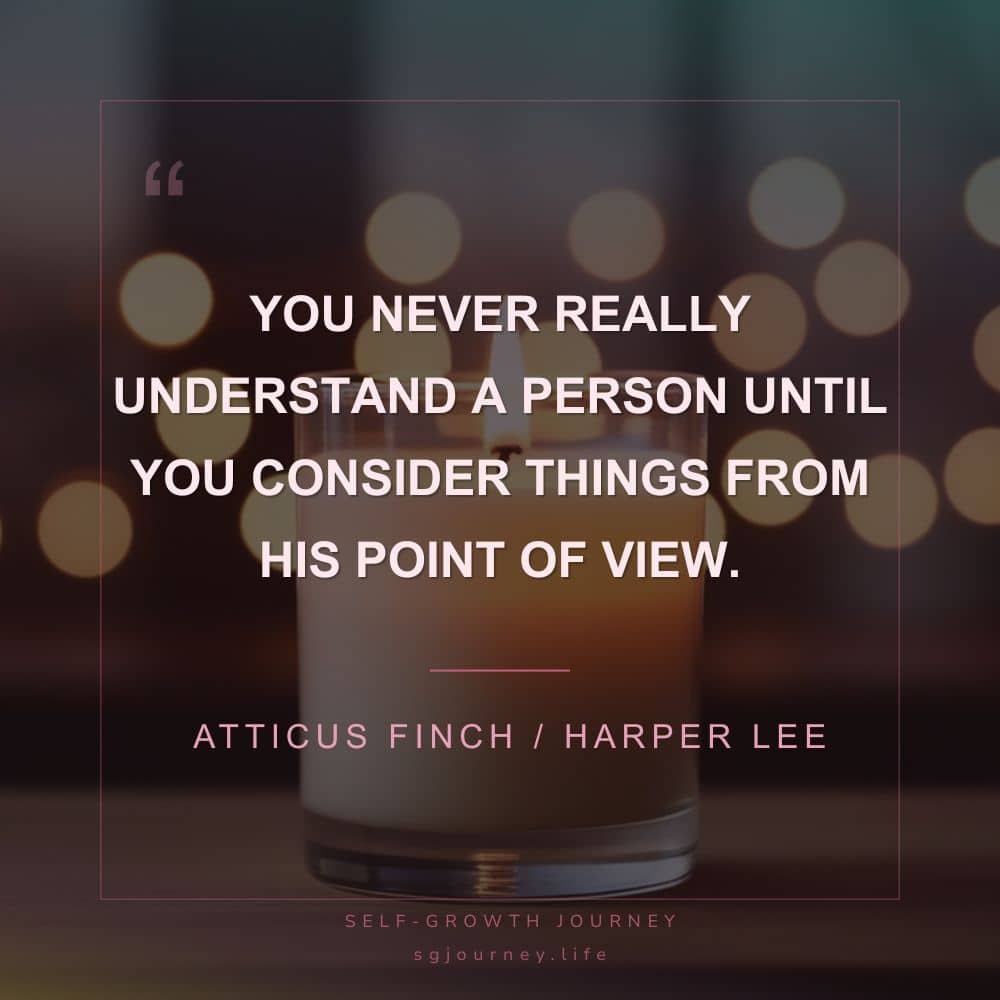
You never really understand a person until you consider things from his point of view.
—Atticus Finch (Harper Lee)
Fictional attorney created by American novelist Harper Lee
Meet the Giant
Atticus Finch (Harper Lee)
Atticus Finch is the fictional lawyer and father at the center of Harper Lee's 1960 novel To Kill a Mockingbird. In the story, he teaches his children to resist prejudice by imaginatively entering another person's experience, even as he defends a Black man falsely accused in the segregated American South. The quotation is spoken by Atticus, but its author is Harper Lee. This distinction matters for metadata while preserving the character's narrative role. The line introduces one of the novel's central practices: understanding requires movement beyond the limits of our own point of view.
What This Means
Considering another person’s point of view is more demanding than imagining what we would do in their situation. That approach quietly keeps our own history, values, and resources at the center. Atticus asks for a deeper effort: to see how the world may look from inside someone else’s circumstances, with their experiences, fears, pressures, and incomplete information.
Perspective-taking does not guarantee agreement. We may understand why someone acted and still judge the action harmful. Empathy adds context; it does not erase responsibility. Its value is that judgment becomes more accurate and less self-righteous. Instead of reducing a person to the worst thing we know about them, we consider the larger story that shaped the moment.
The quote also exposes the limits of imagination. We can never fully inhabit another person’s life, especially across major differences in race, culture, ability, or trauma. Humility therefore belongs alongside empathy. We listen, ask, and remain willing to revise our assumptions rather than claiming perfect understanding. “Walking around” suggests time, not a quick mental exercise. Real perspective develops through attention and contact. The practice is less about pretending to become someone else than about loosening the certainty that our own view is the only reasonable one.
Why It Matters
Quick judgments make social life efficient, but they can also turn assumptions into injustice. This teaching matters wherever decisions affect people whose experience differs from that of the decision-maker. In families, workplaces, classrooms, and public life, perspective-taking can reveal obstacles, motives, and consequences that are invisible from one position.
It also improves conflict. When people feel accurately understood, they are often more capable of hearing challenge or correction. Empathy does not require surrendering standards; it helps us apply them with fuller information and less contempt. The habit begins with curiosity: What might I be missing? What would make this reaction intelligible? Then it requires listening to the answer. Understanding another point of view is not the end of moral reasoning, but it is often the beginning of a fair one.
A Moment of Reflection
Think of someone whose behavior you find difficult: what history, pressure, or fear might you be missing? What question could you ask them that would test your assumptions rather than merely confirm them?
Carry This With You
Empathy asks us to loosen certainty, seek missing context, and understand another perspective before settling into judgment.
Source & Attribution
Harper Lee, To Kill a Mockingbird (1960), spoken by Atticus Finch
Verified
Continue exploring the people, ideas, and pillars behind this wisdom.
Explore More Wisdom