
STANDING ON THE SHOULDERS OF GIANTS
Viktor Frankl on Growth & Change
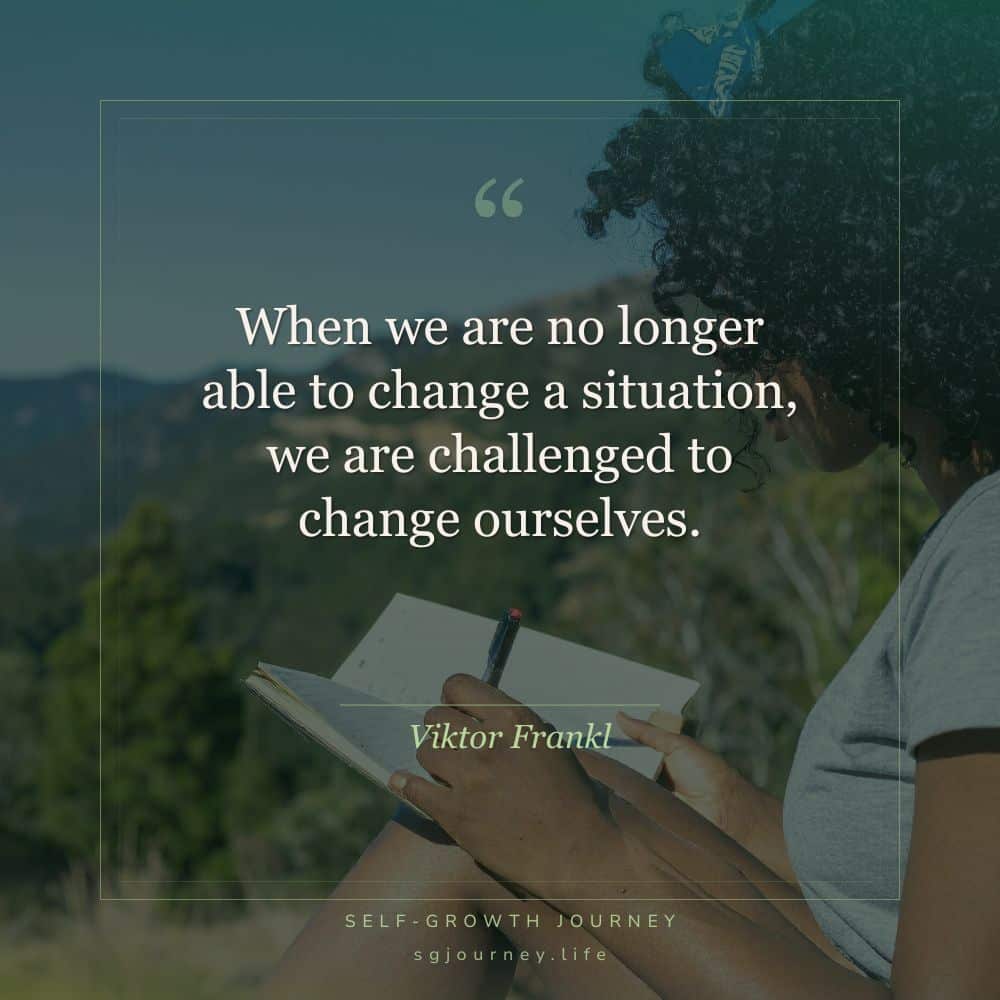
When we are no longer able to change a situation, we are challenged to change ourselves.
—Viktor Frankl
Psychiatrist, Holocaust survivor, and founder of logotherapy
Meet the Giant
Viktor Frankl
Viktor E. Frankl was an Austrian psychiatrist, neurologist, Holocaust survivor, and the founder of logotherapy, an approach centered on the human search for meaning. His experiences in Nazi concentration camps deeply informed his understanding of suffering, responsibility, and inner freedom. In Man’s Search for Meaning, Frankl argued that even when circumstances cannot be altered, people may retain some freedom in how they respond. This quotation expresses that demanding form of agency: when changing the outside world is no longer possible, growth may require an inward transformation.
What This Means
Some problems can be solved through effort, planning, or persistence. Others cannot. A loss cannot always be reversed. Another person cannot always be changed. The past cannot be rewritten, and certain limitations must be acknowledged rather than overcome. Frankl’s words address the difficult moment when action directed outward has reached its boundary.
Accepting that boundary is not the same as approving of what happened or pretending that pain does not matter. It means recognizing where your influence now lives. If the situation cannot change, you may still be able to change the way you understand it, the values you bring to it, or the person you choose to become through it.
This is not an easy promise of positivity. Inner change can involve grief, patience, courage, and the gradual release of expectations that no longer match reality. It may mean asking a different question—not “How do I make this disappear?” but “How do I meet what is here without abandoning myself?”
Frankl’s insight preserves a form of freedom without denying hardship. We are not always responsible for the circumstances placed before us. We are responsible, within the limits of our capacity, for the stance we practice and the meaning we continue to create.
Why It Matters
Much of our suffering can be intensified by continuing to fight a reality that has already become unchangeable. We replay the conversation, demand a different past, or wait for someone else to become who we needed them to be. That resistance is understandable, but it can keep our lives organized around something we no longer control.
Frankl’s perspective redirects energy toward the choices that remain. You may not control the diagnosis, decision, loss, or limitation, but perhaps you can choose the support you seek, the boundary you establish, the meaning you carry forward, or the kindness you extend to yourself. These choices do not make the original situation fair. They prevent it from having the final word about who you become.
The distinction between surrender and acceptance matters. Surrender says nothing can be done. Acceptance asks what can still be done now that reality has been seen clearly. Sometimes the most meaningful change begins precisely where control ends.
A Moment of Reflection
What situation are you spending energy trying to change even though it may be outside your control? If the circumstances remained the same, what inner response could help you move forward with greater meaning or peace?
Carry This With You
When circumstances cannot be changed, your remaining freedom lies in how you meet them.
Source & Attribution
Man’s Search for Meaning
Verified
Continue exploring the people, ideas, and pillars behind this wisdom.
Explore More Wisdom