
STANDING ON THE SHOULDERS OF GIANTS
Leo Tolstoy on Growth & Change
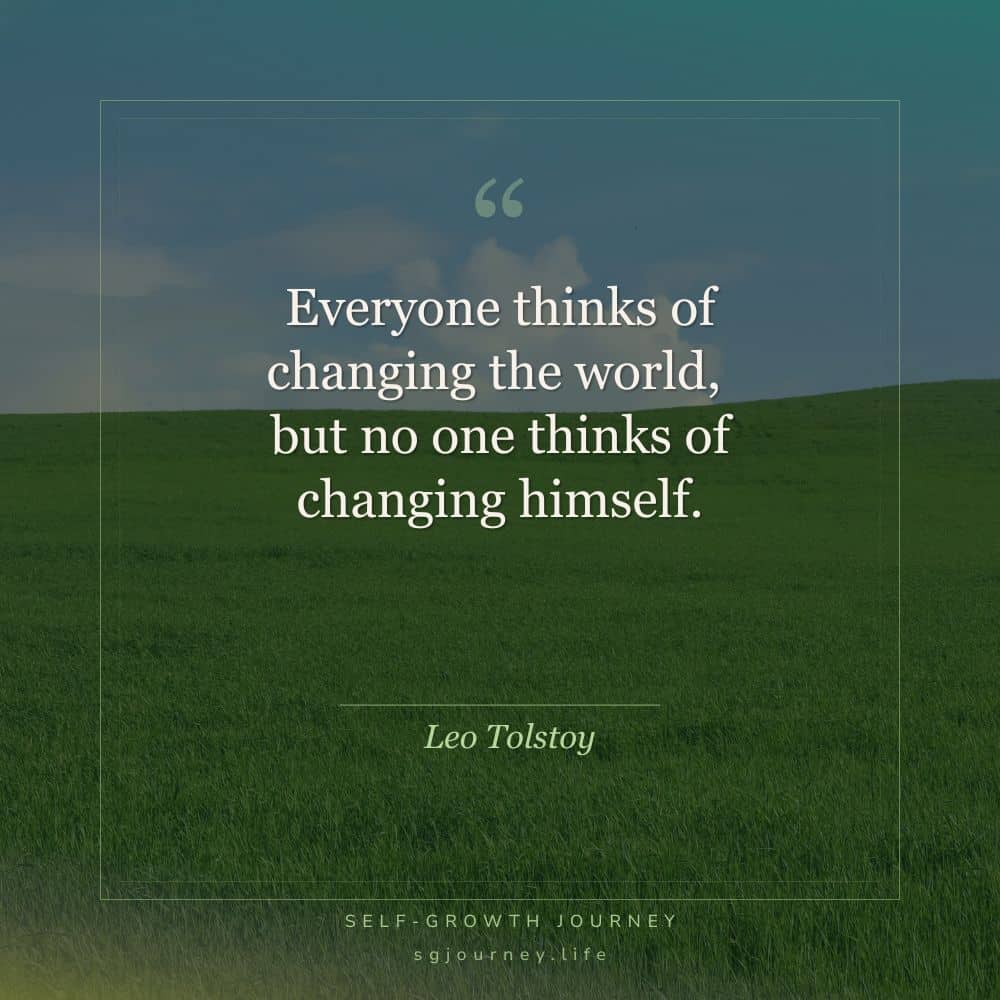
Everyone thinks of changing the world, but no one thinks of changing himself.
—Leo Tolstoy
Russian novelist and moral philosopher
Meet the Giant
Leo Tolstoy
Leo Tolstoy was a Russian novelist and thinker best known for War and Peace and Anna Karenina, as well as later religious and ethical writings about nonviolence, simplicity, and moral responsibility. After achieving literary fame, he underwent a profound spiritual crisis and increasingly examined the gap between social ideals and personal conduct. This quotation is connected to his essay commonly translated as Three Methods of Reform. Its challenge reflects Tolstoy’s conviction that large social aspirations lose credibility when they are separated from inner examination and lived behavior.
What This Means
Changing the world is appealing because the problems are visible outside us. We can identify what institutions, leaders, communities, or other people should do differently. Changing ourselves is less comfortable because it brings the problem into the place where our habits, contradictions, and responsibilities live.
Tolstoy’s statement does not suggest that social problems can be solved through private self-improvement alone. Systems require collective action, and injustice should not be reduced to individual attitude. His challenge is about integrity: the values we demand from the world must also examine the way we participate in it.
It is easier to advocate generosity than to notice our own withholding, easier to demand patience than to practice it in an inconvenient conversation, and easier to criticize power than to examine how we use the power available to us.
Personal change becomes a foundation for influence because it turns an idea into evidence. We begin to understand the resistance, humility, and repetition that change requires. The goal is not to perfect ourselves before contributing. It is to refuse the comforting illusion that transformation is always someone else’s assignment.
Why It Matters
Public conviction can become a way to avoid private responsibility. We share the right message, criticize the obvious problem, and feel aligned with change without asking what our ordinary behavior reinforces. The distance between belief and practice then weakens both.
Beginning with ourselves creates a manageable point of action. We may not control an institution, but we can examine how we speak, spend, lead, listen, vote, teach, or respond within our sphere. These actions are not substitutes for broader reform; they are part of becoming trustworthy participants in it.
This matters because attempted change often reproduces the very patterns it opposes—impatience, domination, contempt, or refusal to listen. Inner work helps us notice those contradictions. The world does not change only because individuals improve, but meaningful change is stronger when the people pursuing it are willing to be changed as well.
A Moment of Reflection
What change do you frequently ask of other people or the wider world? Where could you practice one honest version of that change within your own behavior or immediate sphere of influence?
Carry This With You
The change you advocate becomes more credible when you are willing to let it examine and reshape you too.
Source & Attribution
Three Methods of Reform
Verified
Continue exploring the people, ideas, and pillars behind this wisdom.
Explore More Wisdom