
STANDING ON THE SHOULDERS OF GIANTS
Ajahn Brahm on Inner Peace & Emotional Balance
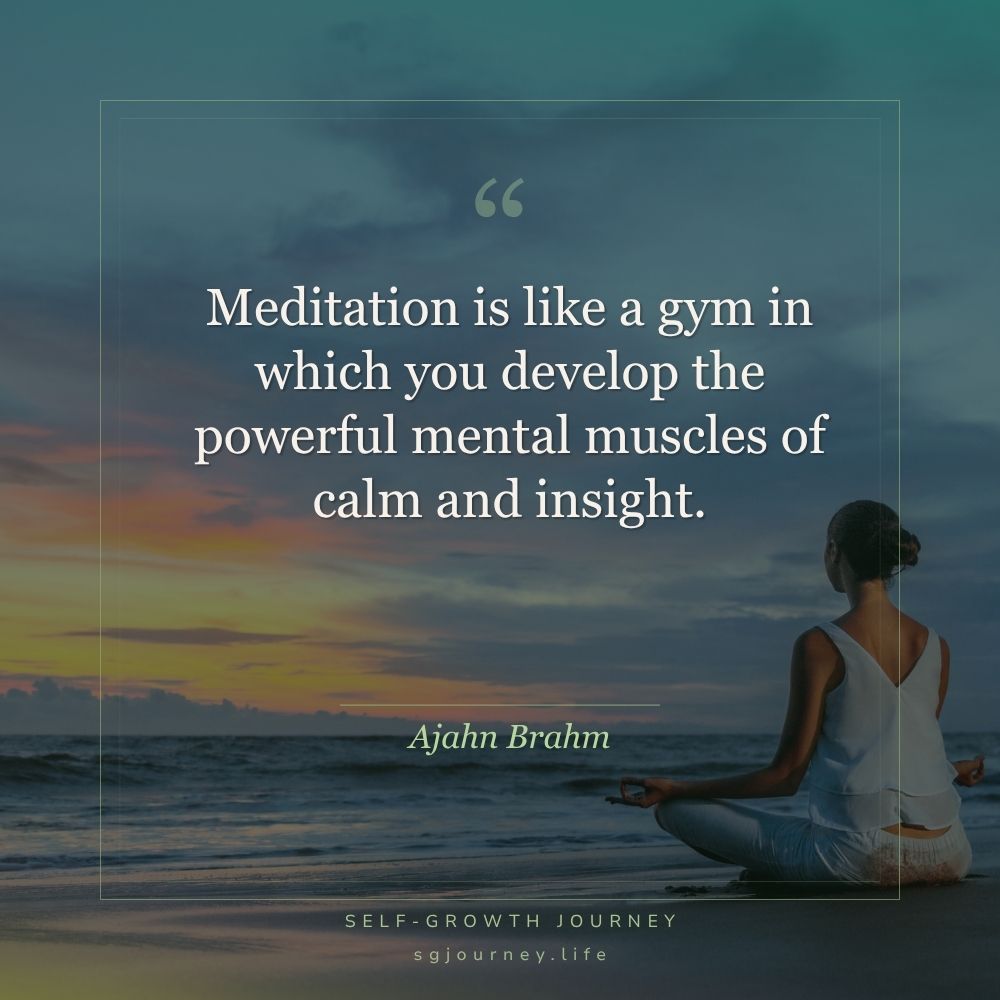
Meditation is like a gym in which you develop the powerful mental muscles of calm and insight.
—Ajahn Brahm
Buddhist monk and meditation teacher known for practical teachings on calm and insight
SHARE THE WISDOM
The Voice Behind the Wisdom
Ajahn Brahm
Ajahn Brahm is a British-born Theravada Buddhist monk, meditation teacher, and author based in Australia. Trained in the Thai Forest tradition, he is known for explaining meditation with humor and practical clarity. His teachings emphasize patience, kindness, stillness, and the gradual training of attention rather than forcing the mind into calm.
What’s Really Being Said
Ajahn Brahm compares meditation to physical training because calm and insight are capacities that can be developed through repeated practice. Just as strength is not created by understanding exercise intellectually, mental steadiness is not produced merely by agreeing that calm would be useful. The mind has to practice returning.
Meditation provides that repetition. Attention wanders, and we notice. A thought captures us, and eventually we recognize that capture. An emotion arises, and we practice observing it without immediately becoming its instruction. The exercise is not maintaining a perfectly empty or peaceful mind; the exercise is noticing and returning again and again.
Over time, this can change our relationship to mental activity. Thoughts remain thoughts rather than automatically becoming facts, and emotions can be experienced without every impulse requiring action. Insight develops partly from seeing these patterns more clearly: what repeatedly hooks our attention, how reactions form, and how quickly experience changes when we stop feeding them.
Like physical training, the effects depend more on practice than on a single exceptional session. Meditation does not eliminate stress or guarantee serenity. It develops familiarity with a different way of meeting the mind—one in which calm, awareness, and perspective become skills we have actually exercised.
Why It Matters to You
We often expect calm to appear when circumstances finally become calm. That leaves inner steadiness dependent on an external environment we cannot reliably control.
Meditation offers a place to practice before the difficult moment arrives. Repeatedly noticing distraction, emotion, and thought can make those processes easier to recognize when they appear in everyday life.
The benefit is not permanent tranquility. It is greater mental range. We may still become angry, anxious, or overwhelmed, but practice can create a little more space in which to notice what is happening and choose what we do with it.
Turn the Thought Inward
When your mind becomes busy or emotionally reactive, how quickly do you notice what is happening? What simple meditation or awareness practice could help you strengthen that moment of noticing and returning?
Keep This Close
Calm and insight are capacities that can be strengthened through deliberate practice.
Source & Attribution
Ajahn Brahm, Mindfulness, Bliss, and Beyond
Verified
Discover More Wisdom
Continue exploring the people, ideas, and pillars behind this wisdom.