
STANDING ON THE SHOULDERS OF GIANTS
Thích Nh?t H?nh on Acceptance, Gratitude & Forgiveness
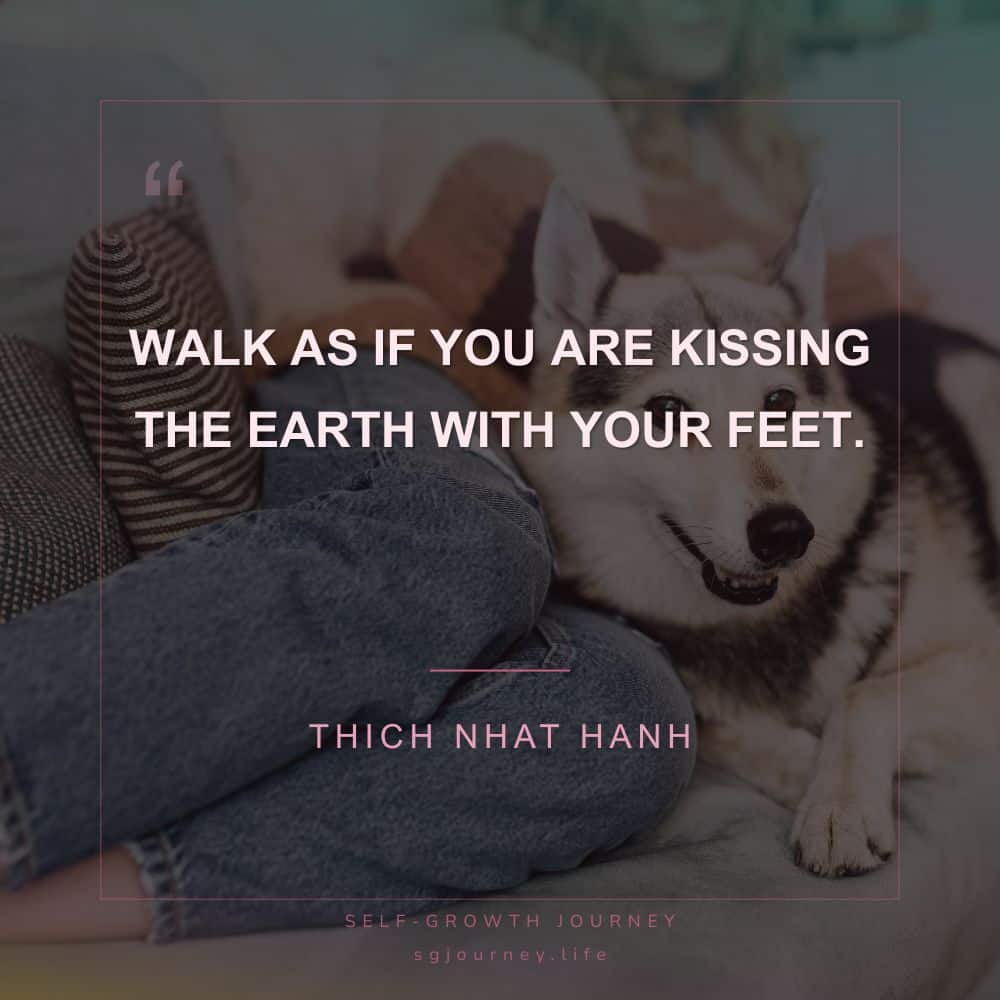
Walk as if you are kissing the Earth with your feet.
—Thích Nh?t H?nh
Vietnamese Zen master, peace activist, and mindfulness teacher
Meet the Giant
Thích Nh?t H?nh
Thích Nh?t H?nh was a Vietnamese Zen Buddhist monk, teacher, poet, and peace activist who helped bring mindfulness practice to a global audience. Exiled from Vietnam after advocating nonviolence during the war, he founded the Plum Village community in France and wrote extensively about engaged Buddhism, compassion, and present-moment awareness. This line appears in Peace Is Every Step within his teaching on walking meditation. Its vivid image joins mindfulness with tenderness: each ordinary step can become a deliberate act of contact, gratitude, and care for the living earth.
What This Means
Most walking is treated as transportation—the body moves while the mind races ahead to a destination, problem, or plan. Thích Nh?t H?nh reverses that habit. To walk as though kissing the earth is to let each step become complete in itself. The image asks for gentleness, intimacy, and full contact rather than speed or abstraction.
A kiss cannot be rushed without changing its meaning. In the same way, mindful walking invites us to feel the pressure of the foot, the support of the ground, the rhythm of breath, and the fact that we are alive in this particular place. Gratitude becomes physical rather than merely conceptual. We do not only think that the earth sustains us; we meet that support step by step.
The teaching also carries an ecological ethic. When the ground is experienced as something worthy of affection, it becomes harder to regard it only as a resource to exploit. Reverence can influence consumption, attention, and care. Yet the practice need not be grand. One conscious step interrupts hurry and returns us to the body. The quote suggests that peace is not exclusively waiting at the end of a journey. It can be embodied in the manner of moving, available whenever we stop abandoning the present for the next place.
Why It Matters
Much of daily stress is intensified by mental absence: the body is here while attention is replaying the past or rehearsing the future. Mindful walking offers a portable way to reunite them. It needs no special equipment and can happen between a desk and a doorway, across a parking lot, or during a longer walk.
The quotation matters because it transforms an activity we already perform into practice. A slower, conscious step can regulate attention, soften urgency, and renew appreciation for our dependence on the natural world. It does not require us to move slowly everywhere. It asks us to remember that efficiency is not the only value. Sometimes the quality of our contact—with our body, our surroundings, and the earth beneath us—is itself the destination. That brief return to contact can make the next action more deliberate.
A Moment of Reflection
During your next short walk, can you feel three complete steps instead of mentally arriving early? What changes in your body and attention when the ground beneath you is treated as a gift rather than an unnoticed background?
Carry This With You
A mindful step turns ordinary movement into gratitude, presence, and a gentler relationship with the earth.
Source & Attribution
Thích Nh?t H?nh, Peace Is Every Step (1991)
Verified
Continue exploring the people, ideas, and pillars behind this wisdom.
Explore More Wisdom