
Most of us know the walk. Something goes wrong in front of other people, and you have to leave while everyone watches you go. Nobody says anything, and somehow that makes it worse.
I was fourteen the first time I remember making that walk. My younger sister and I had joined a Shotokan karate club in Romania, and we were in the middle of a sparring session when I threw a kick that landed squarely on my opponent’s elbow. The pain shot up my leg so fast I could barely stand. I had to stop and limp off the mat with every eye in the room on me.
A Weak Kid Next to His Little Sister
I struggled for most of that first year. I was a weak kid, and karate made sure I knew it. Most sessions ended with me feeling a step behind everyone else.
My sister was three years younger, and she was better at it than I was. Everyone in the room could see that, including me. Thirty years later, it’s easy to smile about. At fourteen, it felt like evidence.
Later in that same session, I went back to the heavy bag and hurt the same foot even worse. By the end of practice, the pain wasn’t really the problem anymore. A year of struggling had finally found its sentence.
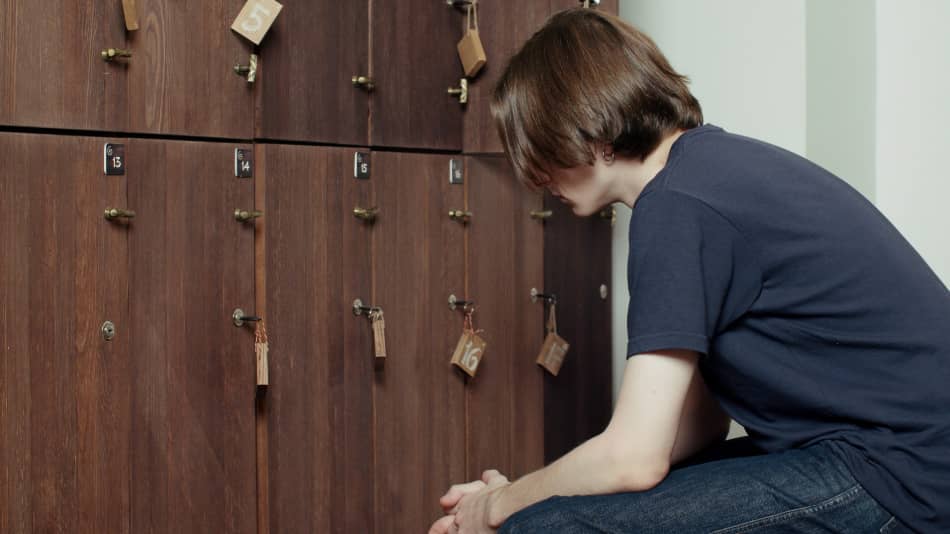
I went to find my coach, Lucian, in the locker room, and I said it out loud: “I don’t think I can do this anymore.”
The Question in the Locker Room
Lucian didn’t tell me I was wrong. He asked me a question.
“Do you genuinely believe you can’t do this anymore? Or do you believe that the people around you believe you can’t? Because there’s a difference. I believe in you. But I need you to believe in yourself, too. If you do, that’s all that matters.”
He said it in Romanian, and I’ve carried it in two languages since.
Looking back, I can see what he was doing. He was pulling apart two things I had welded together without noticing. One was what I believed about myself. The other was what I assumed everyone else believed about me: the kids who watched me limp off the mat, the stronger opponents, the little sister who was better. My “I can’t” sounded like my own voice, but most of it was a verdict I thought the room had already reached.
A lot of self-doubt works this way. It feels personal and private, but if you listen to it long enough, you’ll often hear it quoting someone. A parent’s worry. A teacher’s sigh. A colleague’s raised eyebrow. Sometimes it isn’t quoting anyone at all, only the faces we imagine watching us leave.
So whenever doubt shows up, the question is worth asking: whose doubt is this? Some of it will be yours, and it may be telling you something true. Some of it you picked up somewhere along the way and have been carrying as if it belonged to you.
The second half of what Lucian said matters just as much to me now. He believed in me, and he said so plainly. In the same breath, he told me that wouldn’t be enough.
Belief on Loan
What Lucian gave me that day felt more like a loan than confidence. He put his belief on the table where I could see it, and then made it clear I’d have to bring my own.
I think that’s what the people who shape us often do. They don’t carry us. They hold the door open long enough for us to decide whether we’re going to walk through it.
I stayed. My sister and I trained at that club for about three years in total. Whether I ever became good at it matters less to me now than the fact that I didn’t leave. She was still on the mat beside me, still better at plenty of things, and at some point that stopped feeling like proof against me.

What Stayed with Me
What I’m grateful to Lucian for, all these years later, is that he took me seriously. I was a discouraged kid telling him I wanted to quit, and he gave me his attention. He believed in me enough to question how I saw myself.
He probably couldn’t have known how long I would remember that conversation.
We don’t need to know how our lives would have turned out without them to be grateful for what they gave us. Sometimes gratitude starts with a single moment, and with noticing that we’re still carrying something from it.
Thirty Years Later
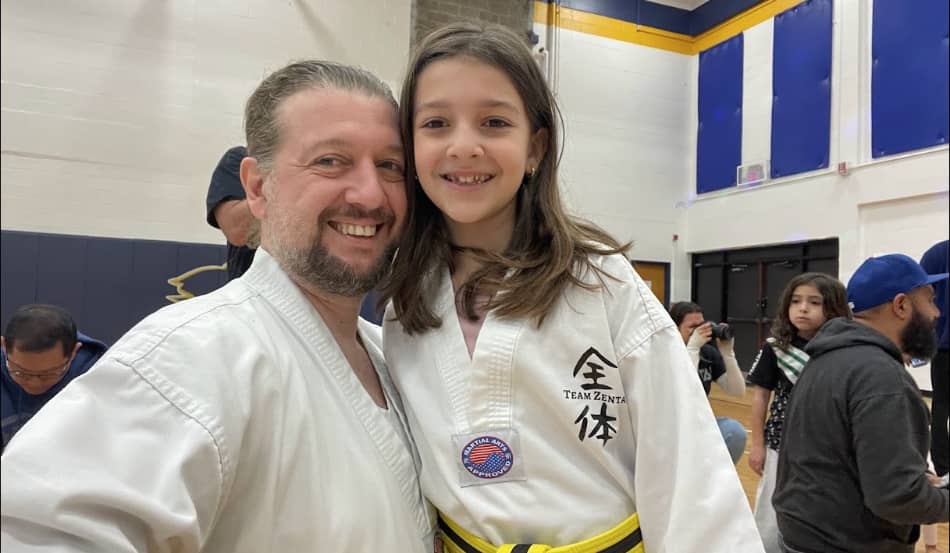
Life took me a long way from that locker room. I moved to the United States, built a career, and started a family. Then, at forty-five, I walked into a Taekwondo club and signed up. I brought my kids with me, and they’re still training today.
I’d like to tell you the doubt stayed in Romania. It didn’t. It still shows up. And every time it does, I hear Lucian’s question.
The fourteen-year-old who limped off the mat in front of everyone now watches his own kids step onto one. I’m not sure I’d be watching if a coach hadn’t asked me the right question in a locker room decades ago.
The Door Someone Held
Someone probably held a door open for you, too. A teacher, a coach, a manager, or a friend who saw something in you before you could. They may not remember it. You might not have thought about them in years.
And somewhere near you, someone may be standing in a locker room of their own, about to say they can’t do this anymore. If you get the chance, tell them you believe in them. Then ask them Lucian’s question, and give them room to answer.
Before you close this, here are three questions to gently reflect on:
3 Questions For You
If this reflection brought up moments that felt difficult or uncertain, you might find comfort in seeing them a little differently. This short guide explores how those experiences are often part of the path—and how they quietly shape a meaningful story of growth. This article is part of the broader Rise Stories pillar, a collection of stories and reflections about growth, resilience, courage, and meaningful change.
