
What if the biggest barrier between you and the life you want isn’t your talent, your circumstances, or your resources but the way you think about growth?
Most people assume that success belongs to the naturally gifted. They believe some people are born disciplined, confident, organized, and brilliant, while others simply aren’t. And once you lock into that belief, every setback becomes proof that you’re “not one of the lucky ones.”
But here’s the truth: Growth isn’t a personality trait. It’s a skill.
And once you learn how to build it, momentum becomes inevitable.
This article will show you how to shift into a growth mindset, break free from self-limiting beliefs, and create the kind of steady progress that compounds into something extraordinary.

What Is a Growth Mindset?
A growth mindset is the belief that your abilities, intelligence, and talents can improve through effort, strategy, and learning. It stands in direct contrast to a fixed mindset, which assumes those qualities are set
in stone.
People with a fixed mindset tend to think:
- “I’m just not good at this.”
- “I’ve never been creative.”
- “I always procrastinate.”
- “I’m not a disciplined person.”
The problem isn’t the statement itself; it’s the finality. Once you label yourself as incapable, you stop experimenting, stop trying, and stop stretching your own potential.
In a growth mindset, the language shifts:
- “I’m not good at this yet.”
- “I’m learning how to improve.”
- “This challenge is helping me grow.”
- “I can develop this skill.”
That tiny word — yet — opens the door for improvement. It transforms failure from a verdict into feedback.
Why a Growth Mindset Builds Momentum
Momentum loves movement.
When you believe you can grow, you’re more likely to:
- try new strategies
- learn from mistakes
- practice consistently
- take action even when it’s uncomfortable
Instead of asking, “Am I good at this?” you begin asking:
- “What can I improve?”
- “What worked?”
- “What didn’t?”
- “What’s the next step?”
This mindset turns every effort into progress, even if results don’t appear immediately. It creates a feedback loop:
Effort > Learning > Improvement > Motivation > More Effort
And once this loop starts spinning, momentum becomes self-sustaining.

The Momentum Myth
Many people wait for motivation before taking action.
They say things like:
- “Once I feel ready, I’ll start.”
- “I need to be motivated first.”
- “I’ll begin when life calms down.”
- “I’ll try once I feel more confident.”
But motivation doesn’t create action. It’s just the opposite, as counterintuitive as it may sound: action creates motivation.
The first step, even a small one, generates the spark. When you see progress, no matter how tiny, you feel encouraged to continue.
This is why the growth mindset is so powerful: It allows you to start before you feel ready.
The Power of Micro-Momentum
Big goals often fail because they feel overwhelming. But micro-momentum changes the game.
Micro-momentum is the accumulation of tiny wins that compound over time:
- writing one paragraph a day
- walking for five minutes
- reading two pages
- practicing a skill for 10 minutes
- tidying one small area
These actions feel insignificant, but they create identity shifts:
“I’m someone who shows up.”
Once you adopt that identity, momentum accelerates.
Turning Failure Into Fuel
Failure doesn’t destroy momentum. Quitting does. When you shift your mindset from:
“I failed, therefore I’m not good at this.”
to:
“This didn’t work; what can I improve?”
you remove the emotional paralysis that stops most people.
Failure becomes a teacher, not a threat.
Growth-minded people ask:
- What did I learn?
- What will I try next?
- How can I adjust?
Each setback becomes a stepping stone rather than a wall.

Build Momentum With Identity
One of the most powerful mindset shifts is this:
You don’t need to become the type of person who grows. You already are, you just need to act like it.
Identity drives behavior.
When you believe:
“I’m a person who improves,”
you naturally:
- practice more
- experiment more
- persist longer
- recover faster
Your identity becomes fuel.
How to Shift Into a Growth Mindset
A growth mindset is often described as the belief that abilities can be developed through effort and learning. But in practice, it’s less about believing something new and more about relating differently to difficulty. It’s the quiet shift from seeing challenges as verdicts on who you are to seeing them as information about what you’re learning.
Most people don’t lack motivation or discipline; they get stuck in subtle inner patterns that interpret effort as proof of inadequacy, mistakes as failure, and slow progress as a sign they’re “not built for this.” A growth mindset doesn’t eliminate these moments. It changes how you respond to them.
Developing a growth mindset is not about forced positivity or repeating affirmations until doubt disappears. It’s about building new mental habits that create space for learning, resilience, and forward motion, especially when things feel uncomfortable. The strategies below are not quick fixes. They are practical shifts in perception that, over time, reshape how you approach challenges, feedback, and your own potential.
Replace Judgment With Curiosity
Judgment tends to shut learning down. When something goes wrong, the mind often jumps to conclusions:
“I’m bad at this,” “I should be further along,” “This shouldn’t be so hard.”
A growth mindset begins by softening those conclusions and replacing them with curiosity.
Curiosity asks different questions: What part felt difficult? What did I expect to happen? What might I try differently next time?
These questions keep you engaged in the experience rather than turning it into a verdict about your ability.
This shift doesn’t excuse mistakes or lower standards. It simply changes the tone of your inner dialogue. When curiosity replaces judgment, setbacks become sources of information rather than reasons to disengage.
Curiosity turns criticism into insight.
Add “Yet” to Your Vocabulary
The word “yet” is small, but it carries a powerful implication: that ability is not fixed. Saying “I can’t do this yet” acknowledges the present reality without treating it as permanent.
This practice is not about pretending progress is guaranteed. It’s about keeping the timeline open. Without yet, the mind often treats current limitations as final. With it, limitations become temporary and workable.
Over time, this language shift builds your patience. It allows you to stay in the learning process long enough for improvement actually to occur, especially when progress is slower than expected.
Whenever you hear yourself say:
“I can’t…”
add:
“…yet.”
This reframes ability as something in progress rather than permanently limited.

Celebrate Small Wins
Many people postpone satisfaction until they reach a final result. In the meantime, effort goes unnoticed, and progress feels invisible. A growth mindset trains attention on small wins, not as consolation prizes but as evidence that learning is happening.
Small wins might include showing up consistently, applying feedback, staying engaged through discomfort, or making a slightly better decision than before. These moments reinforce the behaviors that lead to growth, even when outcomes are still catching up.
Celebrating small wins isn’t about hype or forced positivity. It’s about accuracy. Growth happens in increments, and acknowledging those increments helps sustain motivation and self-trust over time.
Seek Challenges, Not Comfort
A fixed mindset often equates comfort with competence and discomfort with failure. A growth mindset gently reverses that association. It recognizes that challenge is not a signal to stop, but a sign that you’re operating at the edge of your current ability.
Seeking challenges doesn’t mean overwhelming yourself or constantly pushing harder. It means choosing tasks that stretch you slightly beyond what feels easy while remaining manageable. The goal is engagement, not exhaustion.
When challenges are approached intentionally, discomfort becomes familiar rather than threatening. Over time, this builds confidence rooted in adaptability, not in staying within what already feels safe.
Reflect After Effort, Not Just After Results
Many people only evaluate themselves after success or failure. A growth mindset places reflection after effort, regardless of outcome. This keeps learning active even when results are unclear or disappointing.
Simple reflection questions can shift the experience: What did I try? What helped? What didn’t? What would I keep or change next time?
These questions reinforce the idea that growth comes from engagement, not just achievement.
By reflecting on effort rather than outcomes alone, you reinforce a more profound sense of progress. You begin to trust the learning process itself, rather than tying your confidence exclusively to external results.
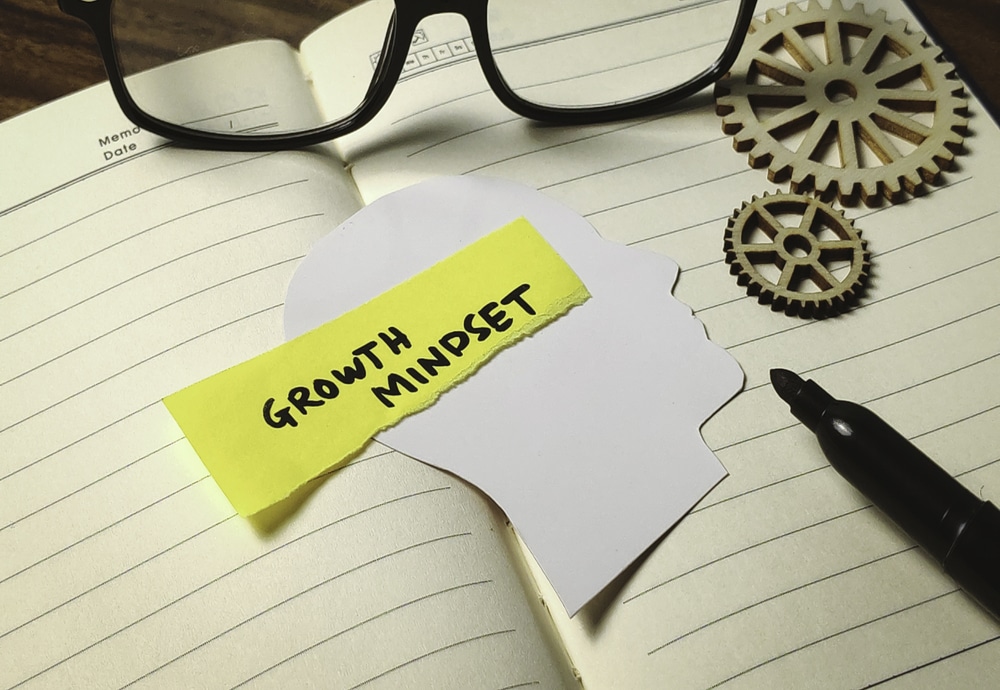
Building a Growth Mindset – Conclusion
Growth doesn’t happen in giant leaps. It happens through small actions fueled by the belief that improvement is possible.
A growth mindset:
- turns effort into progress
- turns failure into feedback
- turns challenges into opportunities
- turns beginners into experts
Momentum begins the moment you start, not when you feel ready.
If you embrace the mindset that you can grow, adjust, and improve, everything you do becomes a step forward.
You don’t need to transform overnight.
You just need to believe that growth is possible and take the next step.
Now, before you go, I have…
3 Questions For You
- When you encounter difficulty or make a mistake, what is your first internal response—judgment, avoidance, or curiosity?
- Where in your life might adding the word “yet” soften a rigid story you’ve been telling yourself about what you can or can’t do?
- What is one recent small win you may have overlooked because you were focused on a larger outcome?
If some of what you reflected on feels familiar, you might find it helpful to explore it a little more gently. This short guide offers a simple way to understand and shift the patterns that shape how you think.
