
Every parent eventually experiences moments when their kids seem to be driving them crazy.
But parenting also has many beautiful moments.
Quiet conversations. Shared laughter.
Watching your children grow into their own personalities.
And then there are the other moments.
The loud ones. The chaotic ones.
The ones where three different arguments somehow begin within the same thirty seconds.
The ones where you briefly consider hiding in the bathroom for five minutes of silence.
When the House Turns Into a Circus
In our house, that kind of moment is not unusual.
I have four kids: a 15-year-old son, a 12-year-old daughter, and two 10-year-old twin boys. Which means that on any given day, I might be dealing with teenage logic debates, pre-teen emotional waves, and two human tornadoes racing through the house.
Sometimes all at once.
If you’re a parent, you probably know the feeling.
The noise level rises. Someone complains that someone else touched their stuff. Another person insists that something is unfair.
Voices get louder. Patience gets thinner.
And suddenly you feel that familiar thought appearing somewhere in the back of your mind:
How do I stay calm when my kids are driving me completely crazy?
It’s a fair question. Because even the most patient parent eventually reaches that moment.
The Honest Truth About Parenting
One thing I’ve learned over the years is that parenting is both wonderful and emotionally intense.
You’re responsible for guiding small humans who are still learning how to manage their emotions, their impulses, and their place in the world.
Sometimes that process is beautiful. Sometimes it’s… loud.
Children also have an uncanny ability to locate every emotional button you possess and press it repeatedly just to see what happens.
It’s not that they’re trying to drive you crazy.
They’re just being kids. They’re learning. They’re testing boundaries. They’re figuring out how the world works.
But that doesn’t mean those moments are easy.
The Unexpected Lunch Party
Not long ago, I had one of those parenting moments that perfectly illustrates how quickly things can shift from calm to chaos.
I work from home, which normally means the house is relatively quiet during the day.
One afternoon, during a school break, my 15-year-old son walked into the house… followed by five of his friends.
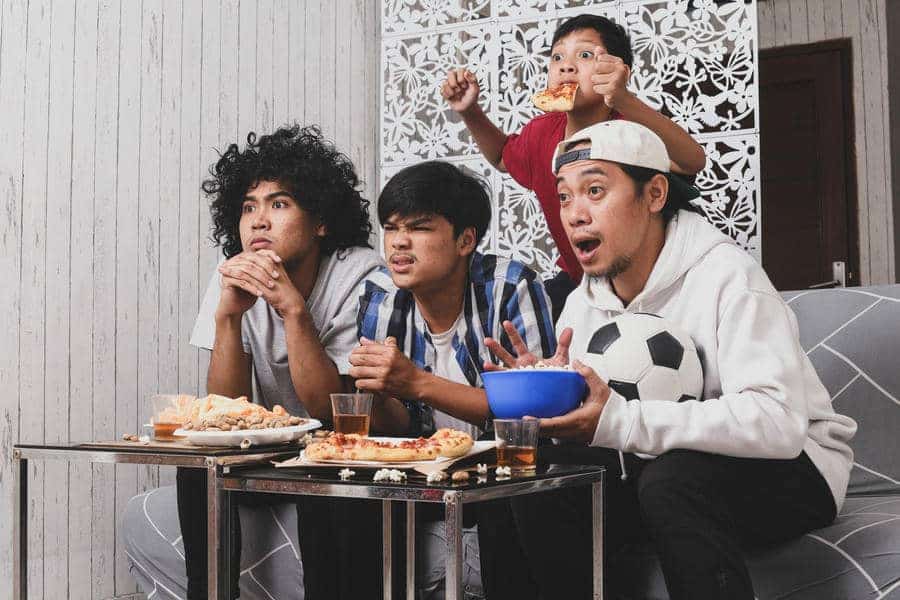
Apparently, they had all decided that our house was the perfect place to hang out during lunch.
Within about thirty seconds, the peaceful afternoon turned into six hungry teenagers standing in the kitchen asking what there was to eat.
At the same time, I was trying to keep the dog from escaping through the constantly opening front door, mentally rearranging my work schedule, and figuring out how to produce enough food to satisfy what seemed like a small army.
Teenagers, it turns out, eat with impressive dedication.
In moments like that, the house can suddenly feel like it has gone from calm to complete disorder.
And yet, those are exactly the moments where your reaction matters most.
What’s Actually Happening in Those Moments
When the house suddenly becomes loud and chaotic, your brain interprets it as a form of stress.
Noise. Conflict. Loss of control.
All of these things activate the part of your brain responsible for reacting quickly to problems.
Your nervous system moves from calm thinking into reaction mode .
That’s why it sometimes feels like your patience disappears almost instantly.
The goal in those moments isn’t to become a perfectly calm parent.
The goal is simply to create a small pause before reacting. Even a few seconds can change how the moment unfolds.
Three Things That Can Help in the Moment
Over time, I’ve noticed that a few simple things can make those chaotic moments a little easier to handle.
Not perfectly. But better.
Pause Before Responding
When the noise level rises and everyone is talking at once, the first instinct is often to respond immediately.
Instead, try something surprisingly powerful: pause.
Take one slow breath. That small moment gives your brain time to shift from reaction mode back into thinking mode.
And very often, the way you respond after that pause will be calmer and more constructive.
Kids learn emotional regulation not only from what we say, but from what we model.
Change the Environment
Sometimes the fastest way to calm a situation isn’t through explanation; it’s through movement.
Kids often become locked into arguments simply because they’re stuck in the same space, feeding off each other’s energy.
Changing the environment can interrupt that cycle.
Separate the kids for a few minutes. Ask someone to help with something in another room. Suggest a quick reset.
It’s amazing how often tension fades when the environment shifts.
Use Humor When Possible
Humor can be one of the most effective ways to defuse tension.
In the middle of an argument, humor changes the emotional tone of the room.
Sometimes when things get too loud in our house, I’ll announce in a completely serious voice:
“Attention, everyone! The official family yelling competition has now begun.”
It usually earns a few confused looks… followed by laughter. And laughter has a magical ability to reset the moment.
The Short-Order Cook Reality
Another parenting reality that many families will recognize happens almost every evening in our house.
Dinner time.
With four kids, you might think you could make one meal and everyone would eat it. That would be nice.
But in our house, food preferences are… highly specialized.
One child loves mac and cheese.
Another refuses to eat it.
Two of them like rice—but only if it’s white.
Someone else insists that rice should be yellow.
Two kids will happily eat bananas.
The other two look at bananas as if they were some kind of strange scientific experiment.
Which means dinner often turns into something resembling a short-order kitchen.
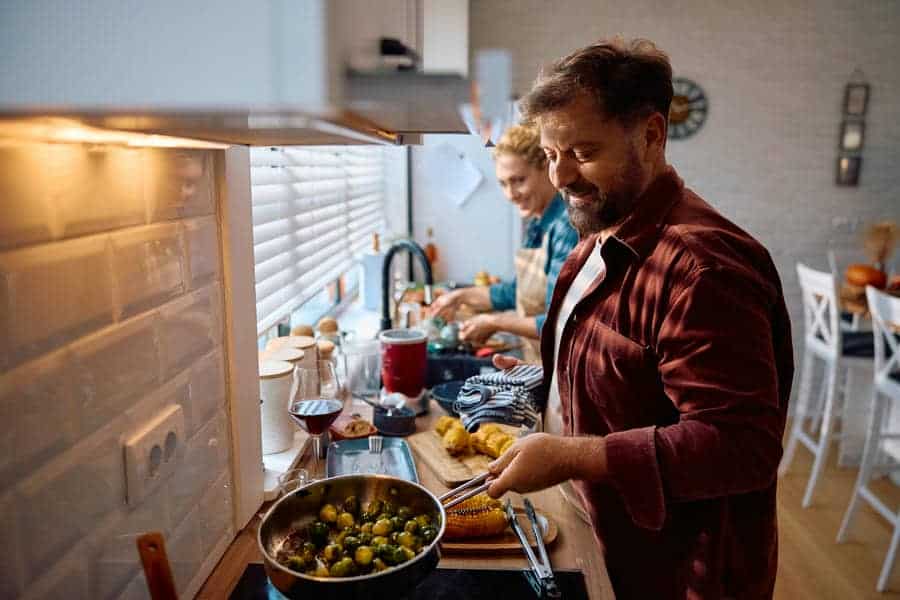
One plate here.
Another variation there.
Something slightly different for someone else.
On some evenings, I feel less like a parent and more like the cook at a busy diner, trying to keep track of four different food orders at once.
It’s chaotic. It’s sometimes exhausting.
But it’s also part of the rhythm of family life.
And Yes… Sometimes You Still Lose Your Patience
Even with the best intentions, there will be moments when patience runs out.
That happens to every parent. No one handles every situation perfectly.
The good news is that perfection isn’t what children actually need. What matters much more is what happens afterward.
When parents acknowledge a moment and reconnect—through a conversation, an apology, or simply a hug—children learn something powerful.
They learn that emotions are normal. They learn that relationships can recover. They learn that people can repair mistakes.
Those lessons may be even more important than handling every situation flawlessly.
The Hidden Gift of Parenting
One of the surprising things about parenting is how much it reveals about ourselves.
Children have an incredible ability to uncover parts of our personality we didn’t know were still there.
Impatience. Frustration. Control. Expectations.
At times, it can feel uncomfortable. But it’s also an opportunity.
Because every moment that pushes our patience is also a moment that invites us to grow.
In that way, parenting might be one of the most powerful forms of personal development that exists.
The Long View
One day, the house will become quieter. The toys will disappear.
The arguments over blankets, snacks, and who sat in whose spot will slowly fade.
The chaos that sometimes feels overwhelming today will become part of the memories you look back on.
And strangely enough, you might even miss it.
Because hidden inside all those noisy moments are the days when your children are growing, learning, and becoming who they will eventually be.
A Gentle Reminder
One thing I’ve slowly learned about parenting is that the moments that test your patience the most are often the ones that stay with you later.
Parenting isn’t about handling every moment perfectly.
It’s about showing up, learning as you go, and trying again tomorrow.
There will always be loud afternoons, unexpected lunch parties, and dinners that feel like you’re running a small restaurant out of your kitchen.
And there will be moments when the best idea you can come up with is hiding in the bathroom for five minutes of silence.
But one day, when the house finally grows quiet and there are no more reasons to hide there… you may find yourself missing the noise that once drove you crazy.
Before you close this, here are three questions to gently reflect on:
3 Questions For You
- When was the last time a chaotic parenting moment tested your patience—and what did that moment reveal about you?
- In the middle of the noise and frustration, are there small moments with your children that you might one day look back on with a smile?
- What is one simple thing you could do the next time the house gets chaotic to pause, breathe, and respond more calmly?
If this reflection brought up moments that felt difficult or uncertain, you might find comfort in seeing them a little differently. This short guide explores how those experiences are often part of the path—and how they quietly shape a meaningful story of growth.
